2026-10-18 ·
Are two water heaters more efficient than one?
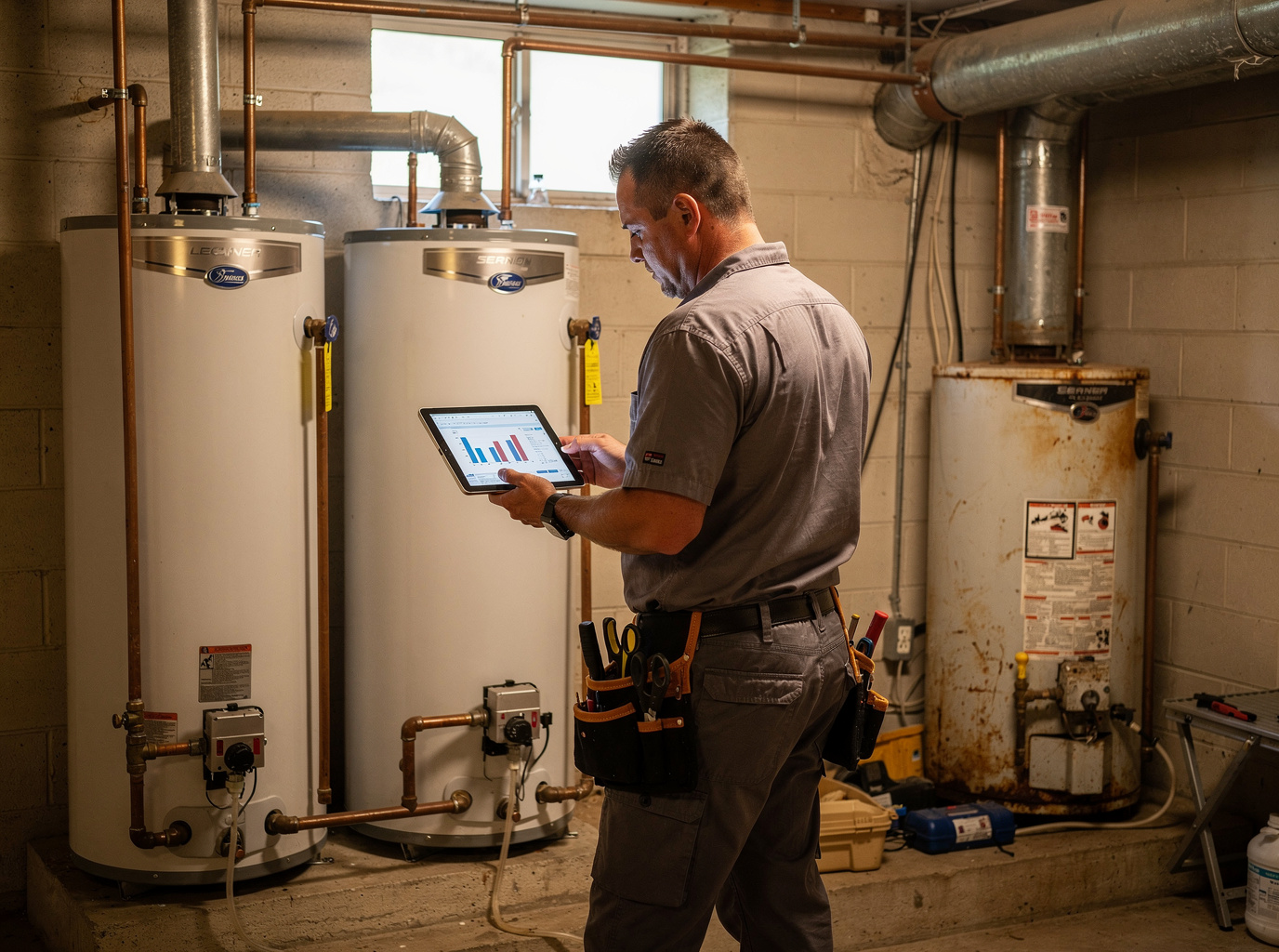
The short answer is no, installing two water heaters is rarely more energy-efficient than a single, properly sized unit, unless you have specific, high-demand circumstances. In most cases, adding a second tank introduces more standby heat loss because you are keeping two separate reservoirs of water at temperature instead of one. For the vast majority of homes in Austin, from the historic bungalows in Hyde Park to the sprawling properties in Westlake, the goal should be optimizing a single, high-efficiency unit rather than doubling down on hardware. However, efficiency isn't the only metric that matters; sometimes, the real goal is capacity management, especially if your household size has grown or you find yourself running out of hot water during those mild winter mornings.
When Two Water Heaters Make Sense
While efficiency might take a hit, there are scenarios where a dual-heater setup provides a functional advantage that outweighs the slight increase in energy costs. If you live in a large home near Mount Bonnell or a multi-generational property in Travis Heights, the distance between your water heater and the furthest bathroom can be significant. In these cases, a second unit—often a small, point-of-use electric heater—can reduce the wait time for hot water, which saves water waste, even if it uses more electricity. We often see this in older housing stock where the main water heater is located in a garage or basement, far from the primary suite. If you are constantly waiting for the shower to warm up, you are effectively paying for the energy to heat water that just sits in your pipes cooling down. In this specific context, Water Heater Installation of a secondary, smaller unit can be a practical utility upgrade.
The Impact of Austin’s Water and Climate
It is important to consider the local environment when evaluating your setup. Austin’s water can be hard, leading to mineral buildup in tanks, which significantly reduces efficiency over time. Whether you are in Downtown, South Congress, or out in Pflugerville, that sediment acts as an insulator between your burner and the water, forcing the unit to work harder and longer. If you have two tanks, you have twice the potential for sediment buildup, which means twice the maintenance. We often see customers struggling with efficiency not because they need a second heater, but because their existing unit is failing due to scale accumulation. Before considering an expansion, it is worth checking if a Water Heater Repair or a professional flush could restore the performance you are missing.
Evaluating Efficiency Versus Capacity
Many homeowners confuse capacity with efficiency. If you find yourself running out of hot water, you likely need a larger tank or a switch to a different technology, rather than a second tank of the same type. If you have a growing family near Zilker Park or Mueller, you might be pushing your current 40-gallon or 50-gallon tank to its limit. Instead of adding a second unit, consider upgrading to a high-recovery gas model or exploring a Tankless Water Heater Installation. Tankless units heat water on demand, which is inherently more efficient because there is no standby heat loss. They are particularly popular in the newer developments around the University of Texas Tower area, where space is at a premium and energy conservation is a priority.
Signs You Need a Change
Before deciding on adding a second unit, ensure your current system is actually the problem. Sometimes, the issue isn't the heater itself but the distribution. If you are unsure whether your current unit is worth saving, our guide on Repair or Replace? How to Decide When Your Water Heater Fails can help you weigh the costs. Look for these red flags that indicate your current unit is struggling regardless of how many heaters you have:
- Inconsistent water temperatures: If the water fluctuates from hot to cold, your thermostat or heating elements may be failing.
- Rusty or discolored water: This is a sign of internal tank corrosion, which cannot be repaired.
- Leaking at the base: Any moisture around the bottom of the tank is a critical failure point that requires immediate attention.